Condition monitoring of machine tools

The efficient and precise operation of machine tools is of decisive importance for modern manufacturing. Condition monitoring — the preventive monitoring of machine conditions — prevents disruptions before they occur in the first place. Early detection of potential issues enables needs-based, efficient maintenance and forms the basis for predictive maintenance — the forward-looking maintenance of machines. This method can prevent unplanned downtime or damage, as well as unnecessary call-outs by service personnel. The prerequisites are accurate and precise sensor data, reliable communication technology and a secure cloud environment.
In this context, systems for monitoring machine condition, such as condition monitoring (CM), are becoming increasingly important. This system enables the continuous monitoring of the condition of machine components and provides early indications of wear or malfunctions. Vibration monitoring plays a central role here, as it is considered one of the most effective methods of condition monitoring.
Why is condition monitoring on machine tools useful and important?
Machine tools are the “hearts” of the manufacturing industry. They form the basis for producing a wide variety of components across many different industries — for example in classic sectors such as mechanical engineering and vehicle manufacturing. But requirements for machine tools and machining machines are also high in energy technology, critical infrastructure and the consumer goods industry. Their high precision and performance are therefore crucial for manufacturing quality and efficiency.
Condition monitoring makes it possible to monitor the condition of machines and their components in real time. The aim is to detect problems before they lead to failures, process disruptions or costly repairs. A well-functioning condition monitoring system not only minimises unforeseen failures, but also helps extend the service life of equipment and reduce production costs.
By continuously capturing relevant data directly at the machine, operators can identify signs of wear, malfunctions or irregularities at an early stage. This makes it possible to carry out preventive maintenance before expensive repairs become necessary. In addition, the use of condition monitoring can help optimise the operation of a machine — for example by identifying over-stressed components while simultaneously monitoring energy consumption.
Another aspect in favour of using condition monitoring is the increasing complexity of equipment. Modern machine tools consist of a large number of components that interact with and can influence one another. Monitoring every part of the machine — especially the more critical components — using sensors and intelligent systems offers the opportunity to detect and remedy problems directly before they affect overall production.
The role of vibration monitoring on machine tools
Vibration monitoring is a core element of condition monitoring. It is particularly effective because vibrations provide a direct indication of the condition of many machine components. Many mechanical issues such as imbalance, defective bearings, drive problems or misalignment lead to characteristic vibration patterns. By capturing vibrations at different points on the machine, irregularities and potential damage can be detected early. Vibration sensors can be installed at various locations on the machine, for example on bearings, drive shafts or spindles. Each of these components has a characteristic vibration pattern that indicates its condition. A sudden increase in vibration amplitude can indicate a defect or wear and is often an early indicator of an impending disruption.
Vibration analysis is one of the simplest and most cost-effective methods of monitoring the condition of a machine tool. It provides direct feedback on how the machine is operating. Modern vibration sensors can deliver highly precise measurements, capturing both the frequency and the amplitude of vibrations. Based on these data, fault sources can be reliably diagnosed and classified.
And this can also be done remotely, regardless of where the machine is located. Routine on-site inspection is not required; authorised persons can access the information anytime and anywhere. Especially for large or decentralised installations, this saves significant personnel and financial resources and reduces the CO2 footprint by avoiding unnecessary travel. Machine operators always keep an eye on the condition of their assets; service companies and machine manufacturers can expand their service portfolio on the basis of the data.
In principle, condition monitoring is suitable for all machines. But the higher the mechanical load, the more important real-time insights become. The IIoT already offers all possibilities for this today — many Industry 4.0 applications would not even be possible without it. So now is the right time to get started.
Intelligent condition analyses in the cloud
The basis for this is sensor data captured at the machine and transferred to the cloud. There, the machine data are analysed and evaluated. Any deviation from a defined target value is a potential indication of a malfunction. More complex systems use intelligent, AI-based data analytics and machine learning to look into the future: When is the optimal time for the next maintenance, when will a component reach the end of its service life? Answers to these questions are typically provided by vibration sensors, temperature sensors and speed sensors, but other types and combinations are also possible. The sensor data are transferred via a gateway to a secure cloud environment and evaluated to monitor the condition of the system and predict potential malfunctions. Vibration monitoring is therefore a proven and reliable method for rotating machine components. By analysing vibration patterns, potential damage can be detected early. High vibration levels can be due to imbalance, bearing problems or misalignment. These can negatively affect equipment performance and, in the worst case, lead to failures.
Small, integrated and self-sufficient: the right technology
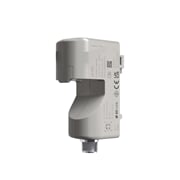
To fully realise the potential of condition monitoring anywhere and on any machine, you need a solution with an independent power supply, a compact design and integrated connectivity. The IoT sensor minion is exactly such a flexible, maintenance-free and self-sufficient solution. It requires no external power source, no network infrastructure, no separate cloud solution and hardly any space. It is quick and easy to install, even under unfavourable structural conditions. A cloud solution is provided directly. Thanks to these features, you can equip any of your machines with sensors quickly and cost-effectively to collect important operating data — even without extensive expertise or IT knowledge.
Benefits of condition monitoring and vibration monitoring on machine tools
Implementing condition monitoring — provided the right technology is in place — can deliver major effects for your business with manageable effort.
Early fault detection and preventive maintenance
The greatest advantage of condition monitoring, especially through vibration monitoring, is timely fault detection. Irregularities that might otherwise only be noticed through a sudden machine disruption can be diagnosed at an early stage. The operator is informed in good time about potential issues, which prevents unplanned outages. This enables effective maintenance management, in which defective or worn components are replaced or repaired before major damage occurs.
Maximising machine uptime and service life
Continuous monitoring of the condition of machine tools helps maximise machine uptime. Since machines no longer have to wait for signs of failure and are serviced early, operating times can be significantly increased. This, in turn, leads to a longer service life of machine components. This is particularly important in high-precision manufacturing environments where downtime and repairs are not only costly but also time-critical.
Cost reduction by optimising maintenance strategies
Condition monitoring can significantly reduce maintenance costs. Instead of carrying out regularly scheduled maintenance cycles that are not always necessary, the system can intervene precisely when it is actually required. This needs-based maintenance not only saves costs, but also reduces effort and machine downtime.
Improving production quality
Condition monitoring and vibration measurement can also improve production quality. Machines operating in perfect condition deliver more precise results and ensure consistently high quality of the parts produced. Compliance with tolerances is also better ensured by stable machine performance.
Small sensors, big impact: benefits at a glance
The key benefits include:
- Smooth operation and reduced downtime
- Higher machine utilisation and productivity
- Protection of valuable assets, longer machine service life
- Effective maintenance management
- Valuable insights for more complex analyses
Specific challenges in condition monitoring and vibration monitoring on machine tools
Despite the many benefits, there are also various challenges when implementing condition monitoring and vibration monitoring in practice.
Complexity and diversity of machines
Machine tools are very complex in their design and functionality. Each machine is unique and has its specific requirements for condition monitoring. It is therefore not always easy to select the right monitoring system for each machine. Installing sensors and integrating them into the existing machine control system can also be challenging. To achieve meaningful results, sensors must be installed in the right places on the machine, which can be problematic especially with complex machines or machines with multiple moving parts. The IoT sensor minion is your small helper for all installation positions and fits any machine. Thanks to its space-saving design, it can also be used without difficulty in confined installation spaces. Installation is made as convenient as possible with suitable adapters, and any bothersome cabling is eliminated entirely.
Data volume and analysis
Another issue is the huge amount of data generated by continuously monitoring a machine. The data collected by vibration measurement must be stored and processed efficiently to enable real-time evaluation. This requires powerful IT infrastructures and advanced analysis tools to derive well-founded decisions from the raw data. Machine learning algorithms and artificial intelligence offer new approaches here, but also place new demands on technology and user know-how. Or you can use our minion and achieve maximum impact with minimal effort: once installed, the minion is ready for use immediately and brings the captured data directly into the autosen.cloud or via an MQTT broker into the cloud environment of your choice. Without any intervention in the IT infrastructure, additional analysis tools or programming skills.
Implementation costs
Installing a condition monitoring system based on vibration monitoring involves initial investments. These include the costs for sensors, hardware for data collection and processing, and software for analysing and evaluating the data. In addition, there is often a not insignificant personnel effort required to set up the software and hardware. Especially for smaller companies without a large budget, these investments can be a hurdle. However, the long-term savings from reduced maintenance costs and higher machine availability often make this investment economically worthwhile.
Conclusion: a question of competitiveness
In every manufacturing company, productivity, efficiency and profitability depend to a large extent on the reliability of the machines used and optimised technical service. Using condition monitoring brings competitive advantages in terms of operating, lifecycle and maintenance costs, delivery capability and performance. Monitoring machine tools is therefore a major challenge — but an even greater opportunity. Depending on the application, the possibilities go far beyond pure monitoring: from planning maintenance work and detecting wear to capturing and documenting important operational KPIs such as Overall Equipment Effectiveness (OEE).
Condition monitoring, and vibration monitoring in particular, are indispensable tools in modern manufacturing engineering. They enable early fault detection, preventive maintenance measures and long-term optimisation of machine uptime. The benefits are clear: higher machine availability, lower maintenance costs and improved product quality.
The challenges associated with implementing and using these systems — such as machine complexity and analysing large volumes of data — require careful planning and the use of suitable technologies. Nevertheless, the advantages outweigh the challenges, especially in an industry that is increasingly dependent on automation and efficiency.
Any questions? We are here to help!
Related products
 Cloud compatible
 43 in stock!
Online -5,5 %
282.20 €
266.68 €
Cloud compatible 50+ in stock!
Online -5,5 %
282.20 €
266.68 €
Cloud compatible Back in stock soon
Online -5,5 %
102.35 €
96.72 €
Cloud compatible 39 in stock!
Online -5,5 %
302.35 €
285.72 €