


Electromagnetic flow meters (magnetic-inductive)
The functional principle of electromagnetic flow rate sensors is based on Faraday's law of induction. The flowing medium induces an electric current between two electrodes mounted laterally in the sensor measuring tube; the strength of the electric current depends on the flow velocity. Only suitable for liquids whose conductivity is > 20 microS/cm (not suitable for oil). Read more here

Electromagnetic flow meters (Magnetic-inductive)
All items of the category Electromagnetic flow meters (Magnetic-inductive):
 Cloud compatible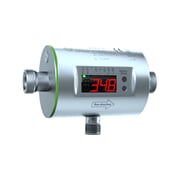
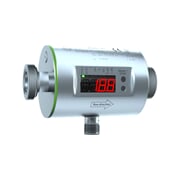
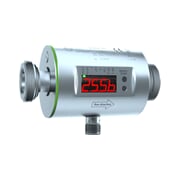
Magnetic-inductive flow meters (MID) from autosen – precision, reliability & innovation
Discover our cloud-compatible magnetic-inductive flow meter for precise, wear-free volumetric flow measurement of conductive liquids. Whether in the food industry, water management or chemicals: with autosen MID sensors you rely on precise measurement data, easy integration and proven quality – certified to EC 1935/2004 and IP69K.
How does MID flow measurement work?
Magnetic-inductive flow meters measure the volumetric flow of conductive liquids using Faraday’s law of electromagnetic induction. A magnetic field is generated in the sensor. When a conductive liquid flows through the field, an electrical voltage is produced that is proportional to the flow velocity. This voltage is detected by electrodes and converted by the electronics into precise flow values.
The result: accurate, low-maintenance and wear-free measurements – even in demanding applications.
You can find more information here: Flow sensors. There we also explain the definition: flow sensors record the volumetric flow or mass flow of liquids and gases and are important for process stability, quality assurance and energy efficiency.

Faraday’s law
The basic operating principle of inductive flow measurement is based on the principle of electromagnetic induction investigated by Michael Faraday in the 19th century. The law defined by Faraday is: E=B∗V∗D
E stands for the induced voltage
B represents the strength of the magnetic field
V is the velocity of the liquid
D is the diameter of the pipe
Advantages of magnetic-inductive flow measurement
- Non-invasive: A major advantage of this type of flow monitor is that it is not in direct contact with the liquid being measured. This means it has no moving parts or wear components that could affect the liquid.
- Accuracy: MIDs are very precise when measuring the volumetric flow of conductive liquids. They are able to deliver accurate results even with fluctuating flow velocities and temperatures.
- Versatility: Magnetic-inductive flow sensors are suitable for measuring a wide range of liquids, including water, acids, alkalis, suspensions and more. They can also be used in pipes of various sizes and materials.
- Low pressure loss: generally only cause a small pressure drop in the pipeline, which is important for keeping energy consumption low.
- Low maintenance: As they have no moving parts, these measuring devices generally require only minimal maintenance and have a long service life.
Disadvantages of magnetic-inductive flow meters
- Requires conductive liquids: only work with conductive liquids because they are based on Faraday’s induction principle. Other flow measurement methods are required for non-conductive liquids. (Hydrocarbons / oils are not conductive)
- Calibration: Periodic calibration of the measuring technology may be required to maintain accuracy. This requires additional time and resources.
- Sensitive to contamination: Deposits or particles in the liquid can impair the accuracy of the measuring device. Regular cleaning or filtration of the liquid may be required.
Which media can magnetic-inductive flow measurement be used for?
Electromagnetic flow sensors are mainly suitable for monitoring the flow of conductive liquid media. In addition, the electrical conductivity of the medium should be sufficient for the measuring device to achieve correct results (conductivity: >= 20 µS/cm and viscosity: < 70 mm²/s at 40 °C).
The exact suitability of a magnetic-inductive flow meter for a specific application depends on various factors such as conductivity, temperature, pressure and other operating conditions, so it is important to consider the specific requirements of the application.
Magnetic-inductive flow meters from autosen are versatile and have proven themselves across numerous industries:
Water and wastewater management:
Water authorities use MID flow meters to monitor drinking water consumption and to control wastewater discharge precisely. The sensors deliver reliable readings even with changing flow rates and slightly contaminated media.
Food & beverage industry:
Precise dosing and volumetric flow measurement of beverages, dairy products or fruit juices. Ideal for hygienic processes thanks to EC 1935/2004 compliance and CIP/SIP resistance.
Chemicals & pharma:
Chemical companies use MID sensors to measure the flow of aggressive acids and alkalis safely in various production lines. In the pharmaceutical industry, they enable complete documentation and traceability of batches.
Energy & industry:
Power plants monitor the coolant circuit using MID flow meters to ensure efficient and safe operation. In metalworking, they ensure accurate dosing of cooling and lubricating fluids during machining.
- In the paper, pulp, textile or mining industries as well, MID sensors ensure process-reliable flow measurements of conductive liquids and suspensions.
Not sure whether an MID is suitable for your application?
Our team will be happy to advise you personally – Head to our support here! Alternatively, you can visit our article Selecting the right flow sensor – there you’ll learn in 9 steps which sensor is the right one for your application.
Installation and maintenance of an MID
Installing and maintaining a magnetic-inductive flow meter requires care and observing certain steps to ensure that the measuring device functions correctly and delivers accurate measurements.
Installing a magnetic-inductive flow meter is this easy
- Install in a straight pipe run (min. 5x pipe diameter upstream/downstream of the device)
- Make electrical connections and earthing according to the instructions
- Initial commissioning: carry out calibration and zero adjustment
- Regular visual inspection of the electrodes for contamination
- Maintenance: if required, clean with a mild cleaning agent – no moving parts!
Maintenance of a magnetic-inductive flow meter
Regular inspection:
Carry out regular inspections of the flow meter to ensure that it is functioning properly. Check for visible contamination, damage or signs of leakage.Checking the electrodes:
Make sure the electrodes are in good condition and show no signs of wear. Damaged or corroded electrodes should be replaced.Check calibration:
At certain intervals, the calibration of the flow monitor should be checked and adjusted if necessary to ensure accuracy. In particular, if these are MIDs that have previously been calibrated.Keep maintenance records:
Keep records of maintenance work and calibrations to have evidence that the measuring device has been properly maintained.
Cleaning:
If the flow sensor is contaminated, clean it according to the manufacturer’s instructions. Deposits or particles in the liquid can impair measurement accuracy.Electrical connections:
Check the electrical connections regularly for looseness or corrosion. Make sure the connections are secure and intact.Follow manufacturer instructions:
Follow the manufacturer’s specific recommendations for maintenance and replacement of wear parts.- It is important to note that maintenance requirements may vary depending on the manufacturer and model. Therefore, it is advisable to consult and follow the manufacturer’s instructions and the specific maintenance requirements for your magnetic-inductive flow meter. Regular maintenance ensures the accuracy and reliability of the measuring device and prevents unplanned downtime.
Frequently asked questions (FAQ) about magnetic-inductive flow meters
An MID generates a magnetic field through which the conductive liquid flows. This produces an electrical voltage, which is measured and converted into flow. This principle is based on Faraday’s law of electromagnetic induction.
MID flow meters are suitable for all conductive liquids, e.g. water, milk, fruit juices, chemicals or wastewater. Gases and non-conductive media (e.g. oil) are not suitable.
MIDs are wear-free, low-maintenance and offer very high measurement accuracy – even with changing flows. They cause hardly any pressure loss and are suitable for hygienic as well as industrial applications.
MID flow meters are generally low-maintenance. For maximum accuracy, regular visual inspection and – depending on the area of application – annual calibration are recommended.
Our devices are food-safe (EC 1935/2004), meet protection rating IP69K and are IO-Link compatible for easy system integration.
Yes, our MID flow meters are cloud-ready and can be connected to autosen.cloud or other IIoT systems.
Any questions left?
Head to our FAQ
