


Vortex flow meters
Vortex flow meters are based on the principle of the Kármán vortex street. In a pipe with media flowing through it, a baffler is mounted behind which the flowing medium produces a vortex. The resulting pressure differences are measured by a piezo element and the flow velocity is calculated. These flowmeters are used for water, water-glycol mixtures and coolants. Read more here

Vortex flow meters
All items of the category Vortex flow meters:
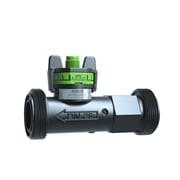
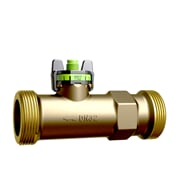
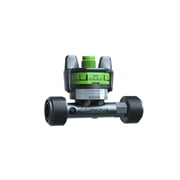
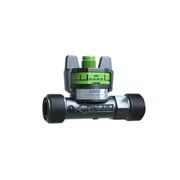
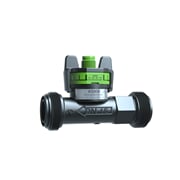
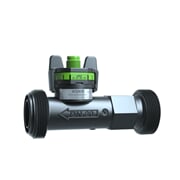
What are vortex flow meters?
Vortex flow meters are highly precise sensors for measuring liquids in pipelines. They operate on the principle of the Kármán vortex street: a bluff body in the measuring tube generates vortices whose frequency is proportional to the flow velocity and therefore to the flow rate. This technology is particularly well suited to applications with water, glycol, metalworking fluids and a wide range of industrial media.
How vortex flow measurement works
The vortex principle explained simply
When a fluid flows past an obstacle (bluff body), alternating vortices form behind it – the so-called Kármán effect. The frequency of this vortex shedding is directly proportional to the flow velocity.
Signal acquisition and evaluation
A sensor – usually piezoelectric or a pressure transducer – detects the vortices that form. The electronics then calculate the volumetric or mass flow rate precisely. Modern devices also take temperature and pressure into account for compensation and provide digital output signals for integration into control systems.

Design and components of a vortex sensor
Pipework:
Houses the sensor; material depends on the medium and process.
Sensor unit:
Detects vortex formation and shedding.
Display/output:
Local display or direct forwarding to the control system
Bluff body (obstruction body):
Generates the characteristic vortex street.
Electronics/evaluation:
Converts the signal into a flow value (usually 4...20 mA or digital).
Industries and applications
Thanks to their precision and reliability, vortex flow meters are used in many industries and applications where accurate measurement of liquid flow is required. Below you'll find some typical application examples.
Chemical industry:
Precise flow measurement of chemicals, solvents and process fluids. Vortex sensors ensure exact dosing and monitoring in production processes and contribute to quality assurance.
Food industry:
Vortex flow meters are suitable for technical ancillary processes, such as monitoring cooling media or cleaning solutions, where there is no direct contact with food. For hygienic flow measurement with direct media contact, we offer our certified magnetic-inductive flow meters (MID).
Pharmaceutical industry:
Precise monitoring and dosing of pharmaceutical substances, solutions and medicines. Vortex sensors support compliance with regulatory requirements and ensure reproducible results in manufacturing.
Water and wastewater engineering:
Flow measurement of drinking water, process water and wastewater in municipal and industrial plants. Vortex flow meters provide a robust solution for monitoring and controlling water flows.
Semiconductor industry:
Controlled monitoring of ultra-pure liquids in cleanroom environments. The sensors ensure maximum precision in the supply and production of semiconductor components.
Heating, ventilation and air conditioning (HVAC):
Efficient control and monitoring of heating, cooling and ventilation media in buildings and industrial plants. Vortex flow meters ensure optimum energy use and reliable system performance.
Vortex flow meters: advantages, disadvantages and operating limits
Vortex flow meters are an excellent choice for many applications, especially when accuracy and reliability are required. Even so, it is important to understand the advantages and disadvantages of this measurement principle.
Advantages of vortex flow meters
- High accuracy: Precise measured values, especially under stable flow conditions
- Versatile: Suitable for many liquids
- Reliable & durable: Robust design, low maintenance
- Low pressure drop: Efficient measurement without significantly affecting the medium
- Insensitive to media properties: Works regardless of conductivity or transparency
- Digital integration: Modern vortex flow meters often provide digital output signals and can be integrated into automation systems.
- Easy installation: Quick installation, little adaptation effort
Disadvantages of vortex flow meters
- Limited accuracy at low flow rates: Minimum flow is required
- Sensitive to flow profiles: A stable installation location is required for accurate results
- Power supply required: Sensors need energy for measurement and signal processing
- Not suitable for acoustically damped flows: Limited use at low Reynolds numbers
Suitable media for vortex flow meters
Vortex flow meters are versatile and are suitable for measuring the flow rate of a wide range of media in industrial applications. Typical media include:
Liquids:
- Water (drinking water, wastewater)
- Chemicals (acids, alkalis, solvents)
- Pharmaceuticals
- Cooling and heating liquids
Note: Selecting the right vortex flow sensor always depends on the type of medium, the required flow range, temperature and pressure. If in doubt, get advice from our experts to find the optimum solution for your application. Here you can access our support area.
Selection & installation: what should I look out for?
- Define the application profile: Medium, temperature, pressure, flow range
- Select the right sensor: Model, size, connection, material
- Determine the installation location: Calm, stable flow profile
- Prepare the pipework: Clean, free of deposits
- Follow the manufacturer's instructions: Installation orientation, calibration
- Check the electrical connection: Integration into control system, signal transmission
- Regular maintenance: Ensure sensor function and measurement accuracy
Frequently asked questions (FAQ) about vortex flow meters
A bluff body generates vortices in the medium. The frequency of these vortices is measured and converted into the flow rate.
For water, glycol, many chemicals – see above for details.
Unlike, for example, magnetic-inductive (MID) flow sensors, the vortex principle measures independently of the medium's conductivity and is particularly robust and low-maintenance. In addition to vortex sensors, at autosen you will also find sensors with common measurement principles such as magnetic-inductive (MID) and calorimetric. You'll find an overview and clear explanations of the various measurement principles – including their advantages and typical areas of use – on our flow meters page.
A stable flow profile
Our vortex flow meters do not have food-grade certification and must not be installed directly in contact with food media. However, they do have approval for drinking water. For applications with direct contact, please use our MID flow meters with the corresponding declaration of conformity in accordance with EC 1935/2004.
Any questions left?
Go to our FAQ here
