


Flow meters
Whether for process monitoring, consumption measurement or plant protection: flow meters ensure efficient processes. They precisely measure the volume or mass that flows through a pipe per unit of time. Find the right sensor for your application here, or learn more about selection criteria and how the measurement principles work. Read more here.

Flow meters
All items of the category Flow meters:
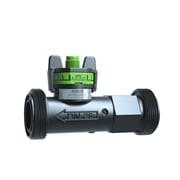
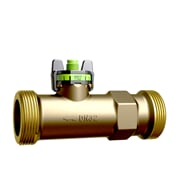
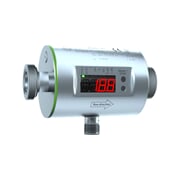
 Cloud compatible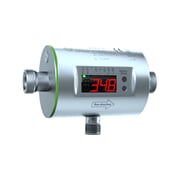
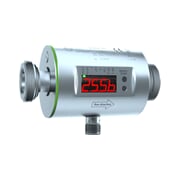
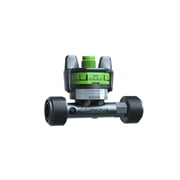
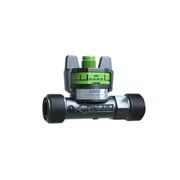
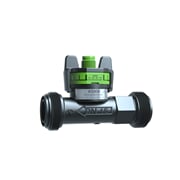
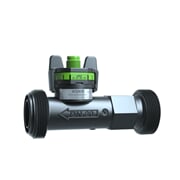
What are flow sensors?
Flow sensors are essential for the precise control and monitoring of liquids in industrial processes. Whether in water treatment, the beverage industry or chemical processes: modern flow sensors enable accurate dosing, fast leak detection and consistently high product quality. Thanks to innovative technologies such as electromagnetic flow measurement as well as IO-Link and IIoT integration, they can be easily integrated into existing systems and provide reliable real-time data at all times.
Your benefits at a glance:
- Maximum process reliability: Early detection of deviations and leaks
- Industry expertise: Expert advice, product comparison and practical examples for every application
- Efficiency & cost control: Optimal use of resources, less material loss
Definition and importance of flow measurement
Flow definition:
Flow refers to the quantity of fluid that passes a given point within a certain period of time. Common units are litres per second (l/s) or cubic metres per hour (m³/h). A higher flow value means that more fluid is transported per unit of time.
Typical communication interfaces:
IO-Link and analogue output (4–20 mA / 0–10 V) for seamless integration into modern control systems.
Why is flow measurement important?
Whether in the food industry, in water treatment or in power generation – accurate flow measurement is the basis for:
Efficiency & cost control:
Avoiding material loss and optimising energy consumption.
Quality assurance:
Reliable consumption measurement during the manufacturing process.
Plant safety:
Protection against overheating in cooling systems and prevention of pipe bursts.
Billing & consumption measurement:
Fair and accurate recording of water or energy consumption.
What is needed?
Measured variable
Quantity per time/volumetric flow rate
Velocity of the medium
Flow sensor
Flow velocity sensor
Output e.g. l/min
Output e.g. m/s
What matters is the measured variable:
Flow sensors measure flow/volumetric flow rate (quantity per time), while flow velocity sensors often measure flow velocity (velocity of the medium).
Measurement principles & technologies of autosen flow sensors
The measurement principles and technologies of flow sensors are diverse and are used in numerous industrial applications. One frequently used method is the electromagnetic flow meter, which is based on the principle of Faraday’s law. A magnetic field is generated that detects the movement of electrically conductive liquids. This technology is particularly suitable for applications in the beverage industry, where precise measurements are crucial.
- Non-contact measuring principle, wear-free
- High measuring accuracy
- Insensitive to contamination
In addition, level sensors and sensor cables in combination with electromagnetic flow meters provide a comprehensive solution for monitoring flow and level. In product comparisons, these technologies are often evaluated in terms of their Resistance Class and measuring accuracy in order to select the best options for specific applications. The integration of IIoT technologies makes it possible to capture and analyse data in real time, which significantly increases efficiency and transparency in industrial processes.
| Criterion | Electromagnetic flow sensors | Vortex flow meters |
|---|---|---|
| Measuring principle | Electromagnetic induction: measures the voltage generated when conductive liquids flow through a magnetic field. | Vortex principle: measures the frequency of vortices created by a bluff body in the medium (piezo element). |
| Typical media | Water, wastewater, chemical solutions, other conductive liquids. | Water, glycol solutions, cooling lubricants and many other liquids. |
| Advantages |
|
|
| Disadvantages |
|
|
| Special notes | Ideal for precise measurements in conductive media, offering versatility thanks to a range of interfaces (IO-Link, analogue output (4–20 mA / 0–10 V), etc.) | Particularly suitable for applications with changing media and when low-maintenance sensors are required |
| More information | Find out more about MID flow sensors. | Find out more about our vortex flow sensors and find the right model for your requirements! |
Areas of application for flow meters

Water treatment:
In water treatment, our flow meters precisely monitor the flow rate and help to comply with limit values and detect process fluctuations early.

Cooling systems:
Prevent overheating and keep cooling performance stable. In cooling systems, our flow meters reliably record volumetric flow so that flow can be controlled precisely and heat dissipation remains constant even during load changes.

Industrial washing systems:
Ensure cleaning quality and dose water/chemicals efficiently. In industrial washing systems, our flow meters deliver stable measured values for process and cleaning media, so that dosing, rinse phases and cycle times can be controlled reproducibly and deviations are detected immediately.

Irrigation:
Achieve uniform irrigation and minimise water losses. In agricultural irrigation systems, our flow meters measure the actual amount of water per string/zone so that application can be controlled as needed and irregularities such as leaks or blockages become visible quickly.

Food industry:
Ensure consistent product quality and reduce waste. In food and beverage production, our MID flow sensors in particular monitor the inflow and flow rates of ingredients and process fluids, ensuring that recipes are adhered to, dosing errors are avoided and filling processes run smoothly.
Would you like to find the right flow sensor?
With our filters and product comparison tool, you can quickly find the right product. Our experts are also happy to offer you personalised advice – by phone or email.
Frequently asked questions (FAQ) about flow meters
A flow sensor measures the flow rate of a medium using physical principles such as magnetic induction or vortex shedding. The choice of measurement principle depends on the medium, the required accuracy and the application.
While flow meters measure the total quantity of a medium over a certain period of time, flow velocity sensors often focus on the velocity of the medium. However, both types can be used in different applications depending on the required measured value.
Yes (e.g. water, many aqueous solutions, acids/alkalis):
Then an electromagnetic flow sensor (EMF) is often the most precise and robust choice. Our EMF flow meters.
No (e.g. oils, ultrapure water, many gases):
Then a vortex flow meter is often a very good, versatile alternative if an EMF cannot be used. Discover vortex flow sensors now.
Deposits or particles in the liquid can affect the accuracy of the measuring device. Regular cleaning or filtering of the liquid may be necessary.
Common installation types include inline, flange, clamp-on, insertion (insertion probe), pipe coupling, compact (integrated) and through-fit installation. Which one is suitable depends on the application and the boundary conditions.
Any questions left?
Go to our FAQ here
